
 The difference between GIB stopping and plastering may sound like trade talk, yet it affects every wall you see each day. A neat finish starts long before paint, and a poor one will show through even the best colour choice. Wellington homes face firm light shifts and damp air, making surface quality even more important.
This blog breaks down the difference between GIB stopping and plastering in simple terms for real projects. It explains what each step does, why the terms get mixed up, and how to choose the right finish for each room. By the end, you will know what to ask for in a quote and what level of finish your home needs.
The difference between GIB stopping and plastering may sound like trade talk, yet it affects every wall you see each day. A neat finish starts long before paint, and a poor one will show through even the best colour choice. Wellington homes face firm light shifts and damp air, making surface quality even more important.
This blog breaks down the difference between GIB stopping and plastering in simple terms for real projects. It explains what each step does, why the terms get mixed up, and how to choose the right finish for each room. By the end, you will know what to ask for in a quote and what level of finish your home needs.
What Is GIB Stopping?
GIB stops the preparation of new plasterboard walls for painting by sealing every joint, corner, and screw hole. Stopper compound builds a flat surface that hides gaps and fastener marks before primer goes on. Careful work at this stage sets the standard for how smooth the wall will look under paint. In Wellington, builders rely on GIB stopping across most new homes and a wide range of renovations. Proper work creates an even base that lets paint read as smooth and consistent under everyday light. Without careful stopping, joins can telegraph through finished walls, especially where side light hits hard during winter afternoons.Standard Modern Process
Correct stopping follows a series of carefully planned steps to create smooth, paint-ready walls. Each stage builds on the previous to ensure durability, an even surface, and a professional finish.- Base Coat: Apply a first layer of joint compound to all seams and screw holes. It fills gaps and provides a solid foundation for the tape, ensuring strong adhesion and a level surface.
- Tape: Embed paper or fibreglass tape along all joints. Tape reinforces the seams, preventing cracks and creating a continuous, seamless wall once the compound dries.
- Second Coat: Smooth additional compound over the tape for uniformity. It hides imperfections from the base coat and strengthens the joint for long-term stability.
- Top Coat: Apply a fine finishing layer for a seamless surface. Fine finishing ensures walls are perfectly smooth and ready for sanding and painting.
- Sanding: Lightly sand the surface to remove imperfections and prepare for paint. Sanding creates an even texture that allows paint to adhere cleanly and achieve a professional look.
What Is “Plastering”?
Plastering, often called skim coating, covers the entire wall surface, not just the joints. It creates a smooth, Level 5 Finish that is ideal for high-gloss or decorative paints.Purpose Of Plastering
Skim coating removes minor imperfections left after GIB stopping, producing a completely even wall surface. It helps paint adhere better and gives walls a professional, flawless look. Achieving uniformity at this stage prevents minor defects from becoming noticeable after painting. Plastering also strengthens the wall surface, ensuring durability over time. Even walls reflect light evenly, enhancing a room’s overall appearance. Homeowners can enjoy a high-quality finish that looks polished and elegant.Situations To Consider Plastering
Plastering is highly recommended for walls in prominent areas or rooms with bright lighting. It corrects surfaces where old paint has peeled or cracks are visible. Using a skim coat ensures these imperfections are fully covered before painting begins. Renovations often benefit from plastering, which restores uneven or damaged walls. New builds may also use skim coating for high-end finishes. Overall, it delivers a smooth, uniform surface suitable for any finishing paint.Benefits Of A Level 5 Finish
Applying a skim coat achieves maximum smoothness, making walls ideal for decorative or high-gloss paint finishes. It hides minor flaws and imperfections that would otherwise show through paint. The result is a surface that looks professional and visually appealing. A Level 5 Finish also improves wall durability and reduces maintenance over time. Even minor scratches or bumps are less noticeable on a fully skim-coated surface. Homeowners benefit from walls that remain flawless for years, adding value and aesthetic appeal.Comparison Table: The Difference Between GIB Stopping and Plastering (Skim Coat)
Stopping and skim coating both improve plasterboard walls, yet they do different jobs. Use the table below as a quick guide to the difference between GIB stopping and plastering in everyday terms.| Feature | Stopping (Level 4) | Plastering Skim Coat (Level 5) |
| Purpose | Shape, hide joins | Texture, full smoothness |
| Coverage | Joints and screw holes | Entire wall surface |
| Cost | Standard, lower | Higher due to extra labour |
| Time | Faster | Longer due to coat and sanding |
| Best For | Most rooms | Strong side light zones |
| Final Look | Flat joins, mild texture | Very smooth, even texture |
GIB Fixing: The Foundation Of A Straight Wall
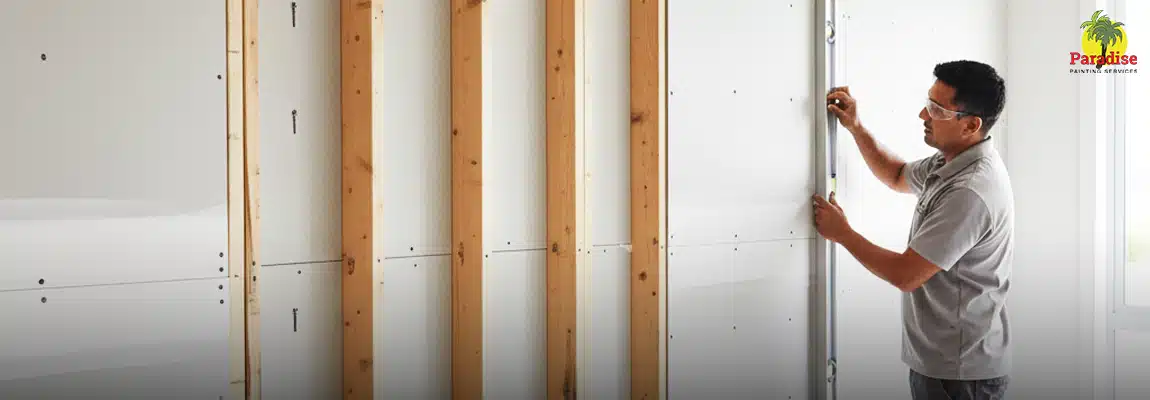 A straight wall begins with GIB fixing. This step sets the plasterboard on the framing and locks it in place. If the sheets are installed incorrectly, the wall will look uneven later.
Fixing Problems To Watch Early
Poor GIB fixing often appears later as visible defects. The issues seen most often include:- Sheets miss studs or sit out of line
- Screws sink too deep and break the paper face
- Screws sit too proud and cause later pops
- Framing bows or twists, but goes unnoticed
- Gaps at joints are wider than they should be
Paradise Painting Assurance
At Paradise Painting Services, the quality of the fix is carefully checked before the stop begins. This ensures screws do not “pop” later, and walls remain level throughout the finishing process. Correct GIB fixing saves time, reduces defects, and guarantees a professional result.The “Paradise” Approach: One Team, One Result
Paradise Painting Services keeps stopping and painting under one roof. This removes the usual gaps that appear when one trader hands the wall to another. The result is a smoother path to a clean finish and a clearer standard throughout.Clear Benefits For Homeowners
Combining stopping and painting into a single service leads to cleaner finishes and fewer delays.- No Arguments: Sanding scratches or pinholes gets fixed within the same job, not pushed to another trade. The finish stays clean, and there is no delay caused by people debating who is at fault.
- One Schedule: One workflow means fewer gaps between stopping and painting. The project stays on track, which matters when rooms need to be ready on time.
- Better Checks: Surfaces get checked after sanding and again before primer goes on. Minor flaws get caught early, before they show through paint.
- One Owner: Quality control stays with one company from start to finish. Any touch-ups get handled quickly and without confusion.
Choosing The Right Finish
The difference between GIB stopping and plastering is easier to pick when looking at the room, the light, and the paint choice. Stopping suits most everyday spaces, while skim coating suits walls that need a smoother look under intense light.- Use Room Purpose: Quiet spaces, such as bedrooms and standard living areas, are suitable for a Level 4 stop. High-traffic zones often require a more rigid, more refined surface.
- Watch Natural Light: Strong side light highlights joints and sanding marks fast. Hallways, stairwells, and rooms with big windows often benefit from a skim coat.
- Match Paint Type: Low sheen paint hides minor flaws better than glossy paint. Dark colours and semi-gloss finishes need smoother walls to look even.
- Check Existing Surfaces: Old walls with patches, peeling layers, or mixed textures respond well to skim coating. Fresh plasterboard in good condition usually only needs stopping.
- Ask For A Light Test: A quick check under daylight shows where a higher-finish matters. It helps confirm choices before work begins.